What is soil horizon?
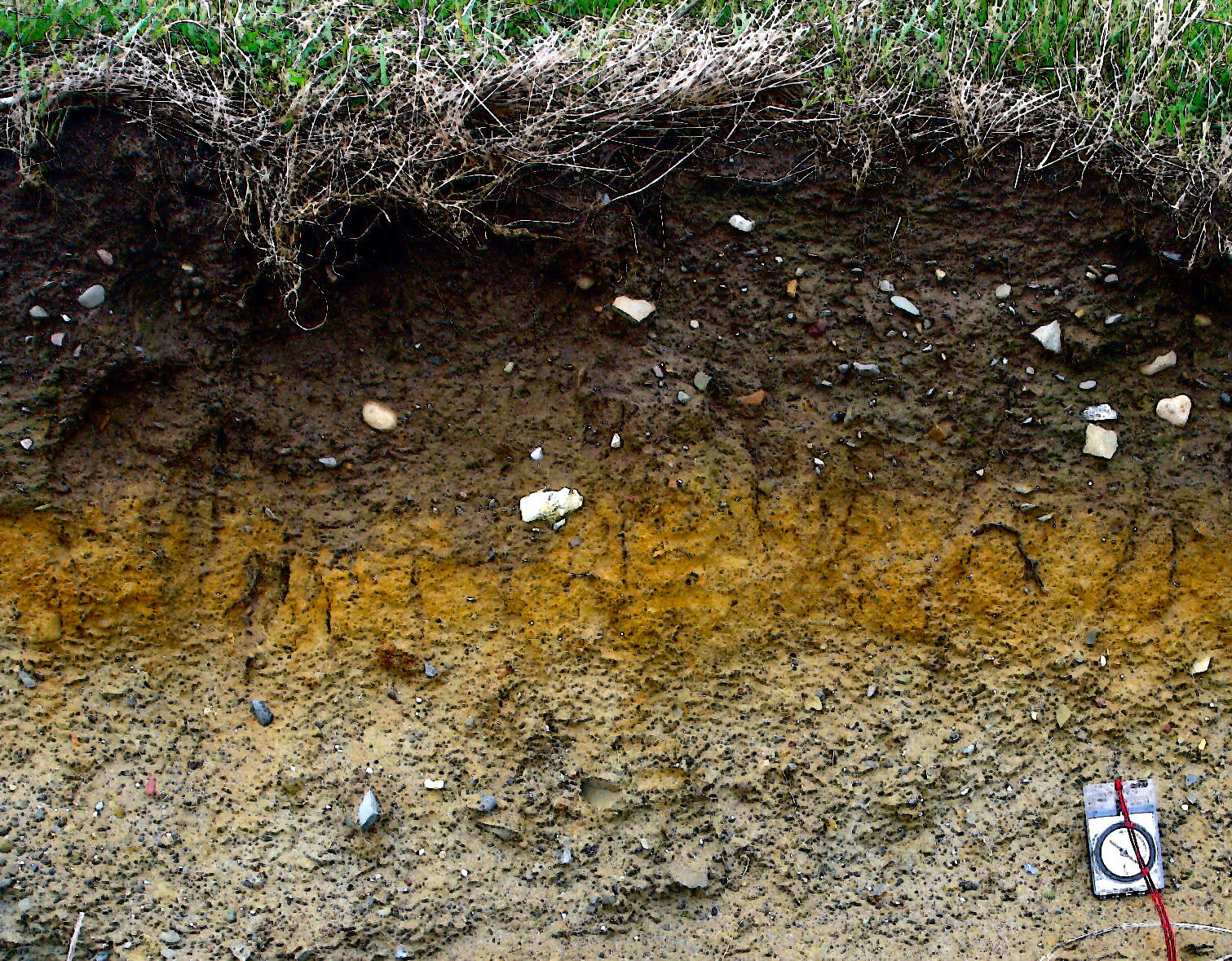
Soil
Soil is a mixture of broken rocks and minerals, living organisms, and decaying organic matter called humus. Humus is dark, soft and rich in nutrients. Soil also includes air and water.
Organisms in the soil need air and water to survive. Having these essential materials – air, water, and organic matter – makes it possible for plants, bacteria, fungi and small animals like earthworms and insects to live in the soil.
All the living things in the soil, plus essential materials that these organisms use to survive, form the soil ecosystem. Scientists study the soil ecosystem because they want to understand how organisms relate to one another and to the environment that surrounds them.
As soils develop over time, layers (or horizons) form a soil profile.
Most soil profiles cover the earth as 2 main layers—topsoil and subsoil.
Soil horizons are the layers in the soil as you move down the soil profile. A soil profile may have soil horizons that are easy or difficult to distinguish.
Most soils exhibit 3 main horizons:
- A horizon—humus-rich topsoil where nutrient, organic matter and biological activity are highest (i.e. most plant roots, earthworms, insects and micro-organisms are active). The A horizon is usually darker than other horizons because of the organic materials.
- B horizon—clay-rich subsoil. This horizon is often less fertile than the topsoil but holds more moisture. It generally has a lighter color and less biological activity than the A horizon. Texture may be heavier than the A horizon too.
- C horizon—underlying weathered rock (from which the A and B horizons form).
Some soils also have an O horizon mainly consisting of plant litter which has accumulated on the soil surface.
The properties of horizons are used to distinguish between soils and determine land-use potential.

For more information visit:

 rimjhim's blog